

Last Updated: November 2026
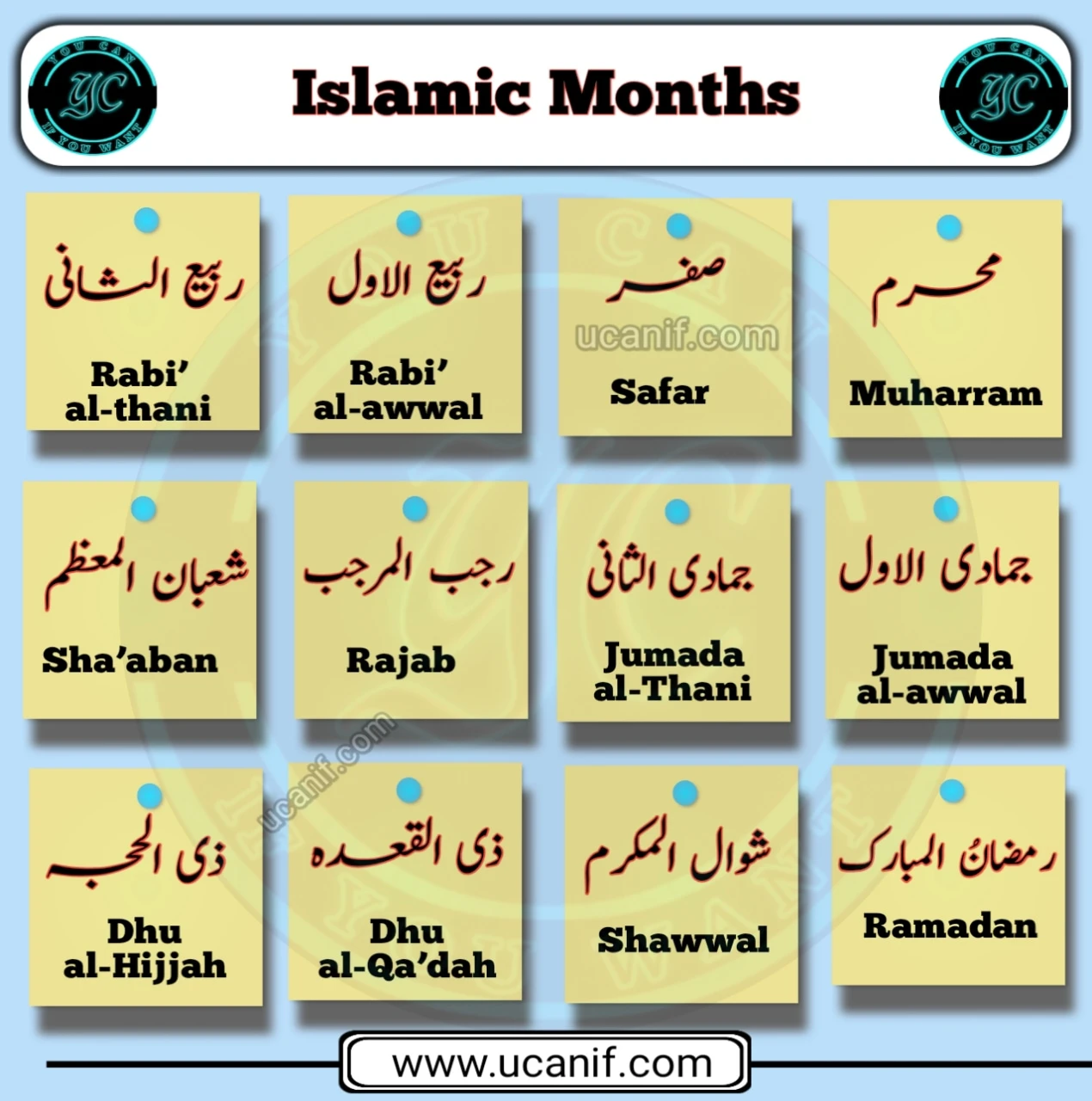
The Islamic calendar, also known as the Hijri calendar, consists of 12 lunar months. These months are used to determine important Islamic occasions, including Ramadan, Eid al-Fitr, Eid al-Adha and Hajj.
Below is the complete list of the 12 Islamic months in order, with their names in English, Urdu and Arabic, along with their meanings and important religious significance.
12 Islamic Months Names in Order (Urdu, Arabic & English)
The following table shows all 12 Islamic months in their correct order.
| No. | English Name | Urdu Name | Arabic Name |
|---|---|---|---|
| 1 | Muharram | محرم | الْمُحَرَّم |
| 2 | Safar | صفر | صَفَر |
| 3 | Rabi al-Awwal | ربیع الاول | رَبِيع الْأَوَّل |
| 4 | Rabi al-Thani | ربیع الثانی | رَبِيع الثَّانِي |
| 5 | Jumada al-Awwal | جمادی الاول | جُمَادَى الْأُولَى |
| 6 | Jumada al-Thani | جمادی الثانی | جُمَادَى الثَّانِيَة |
| 7 | Rajab | رجب | رَجَب |
| 8 | Sha’ban | شعبان | شَعْبَان |
| 9 | Ramadan | رمضان | رَمَضَان |
| 10 | Shawwal | شوال | شَوَّال |
| 11 | Dhu al-Qa’dah | ذوالقعدہ | ذُو الْقَعْدَة |
| 12 | Dhu al-Hijjah | ذوالحجہ | ذُو الْحِجَّة |
Meanings of the 12 Islamic Months
The names of the Islamic months come from the Arabic language. Some names are connected with old seasonal conditions, while others refer to customs or activities in pre-Islamic Arabia. Their original historical explanations should not be confused with religious rulings.
| Month | Commonly Explained Meaning | Important Information |
|---|---|---|
| Muharram | Sacred or forbidden | One of the four sacred months; Ashura falls on the 10th. |
| Safar | Often explained as empty or vacant | The second month of the Hijri calendar. |
| Rabi al-Awwal | First spring | The month in which the Prophet Muhammad ﷺ was born according to a widely followed historical view; the exact date is disputed. |
| Rabi al-Thani | Second spring | The fourth month of the Islamic calendar. |
| Jumada al-Awwal | First dry or frozen period | The name is traditionally associated with cold or dry conditions. |
| Jumada al-Thani | Second dry or frozen period | The sixth month of the Hijri calendar. |
| Rajab | Respect or honour | One of the four sacred months. |
| Sha’ban | Often explained as branching or spreading | The month before Ramadan. |
| Ramadan | Traditionally associated with intense heat | The month of obligatory fasting for Muslims. |
| Shawwal | Traditionally associated with rising or lifting | Eid al-Fitr takes place on the first day of Shawwal. |
| Dhu al-Qa’dah | Month of sitting or refraining | One of the four sacred months. |
| Dhu al-Hijjah | Month of pilgrimage | Hajj takes place in this month; Eid al-Adha is on the 10th. |
عیدالفطر کے موقع پر دوستوں اور رشتہ داروں کو انگریزی اور اردو میں مبارک باد دینے کے لیے ہماری Eid Mubarak Wishes in Urdu and English کی فہرست بھی دیکھیں۔
The Four Sacred Months in Islam
Four months in the Islamic calendar are known as Ashhur al-Hurum (the sacred months). Allah mentions that there are twelve months in the year, four of which are sacred, in Surah At-Tawbah (9:36).
The four sacred months are:
- Muharram – The first month of the Islamic calendar.
- Rajab – The seventh month.
- Dhu al-Qa’dah – The eleventh month.
- Dhu al-Hijjah – The twelfth month.
These months have a special status in Islam. The Prophet Muhammad ﷺ identified these four months in an authentic hadith recorded in Sahih al-Bukhari and Sahih Muslim.
Hijri Calendar vs Gregorian Calendar
The Hijri and Gregorian calendars both have 12 months, but they are based on different astronomical cycles.
| Feature | Hijri Calendar | Gregorian Calendar |
|---|---|---|
| Basis | Lunar cycle | Solar year |
| Number of months | 12 | 12 |
| Days in a year | About 354 or 355 | 365 or 366 |
| Month length | Usually 29 or 30 days | 28 to 31 days |
| Main use | Islamic dates and religious occasions | Civil and international dates |
The Hijri lunar year is about 10 or 11 days shorter than the Gregorian solar year. Therefore, Islamic months move earlier through the Gregorian calendar each year. This is why Ramadan, Eid and Hajj occur in different seasons over time.
Historical Background of Arabic Month Names
The names of the Hijri months were already used by Arabs before the beginning of Islam. Many traditional explanations connect these names with the climate, seasons and customs of Arabia at that time.
For example, Rabi is associated with spring, while the names of the two Jumada months are traditionally connected with cold or dry conditions. Ramadan is commonly linked with the Arabic root associated with intense heat.
Although the Hijri calendar is lunar and its months now pass through all seasons, the traditional names have remained in use.
Test Your Knowledge: Islamic Months Quiz
Answer these five questions to check how well you remember the Islamic months.
Question will appear here.
Score: 0 / 5
Frequently Asked Questions About Islamic Months
1. What are the 12 Islamic months in order?
The 12 Islamic months in order are Muharram, Safar, Rabi al-Awwal, Rabi al-Thani, Jumada al-Awwal, Jumada al-Thani, Rajab, Sha’ban, Ramadan, Shawwal, Dhu al-Qa’dah and Dhu al-Hijjah.
2. What is the first month of the Islamic calendar?
Muharram is the first month of the Islamic calendar and one of the four sacred months.
3. Which are the four sacred months in Islam?
The four sacred months are Muharram, Rajab, Dhu al-Qa’dah and Dhu al-Hijjah.
4. Which Islamic month is for fasting?
Ramadan is the ninth month of the Islamic calendar. Muslims observe obligatory fasting during this month.
5. In which Islamic month is Hajj performed?
Hajj is performed in Dhu al-Hijjah, the twelfth month of the Islamic calendar.
6. How many days are there in an Islamic year?
A Hijri year usually has 354 or 355 days because it is based on the lunar cycle.
7. How many days are there in an Islamic month?
An Islamic month has 29 or 30 days. The beginning of a lunar month is determined according to the applicable moon-sighting or calendar method.
8. Why do Islamic months move through the seasons?
The Hijri calendar is about 10 or 11 days shorter than the Gregorian calendar. As a result, Islamic months gradually move through the Gregorian seasons.
9. Is Ramadan one of the four sacred months?
No. Ramadan is an especially important month of fasting, but it is not one of the four sacred months. The four sacred months are Muharram, Rajab, Dhu al-Qa’dah and Dhu al-Hijjah.
10. What is the difference between the Hijri and Gregorian calendars?
The Hijri calendar is based on the lunar cycle, while the Gregorian calendar is based on the solar year. The Hijri year is therefore shorter.
Conclusion
The Islamic calendar has 12 lunar months, each with its own name and historical background. Learning the 12 Islamic months in Urdu, Arabic and English helps students and readers understand the Hijri calendar and important Islamic occasions such as Ramadan, Eid and Hajj.
Use the table above to remember the correct order and names of all 12 Islamic months.
