

All Tenses in Urdu with Examples | 12 Types + Chart + Practice
If you want to learn English grammar easily, understanding tenses in Urdu is very important. In this guide, you will learn all 12 types of English tenses in Urdu with simple explanations and examples.
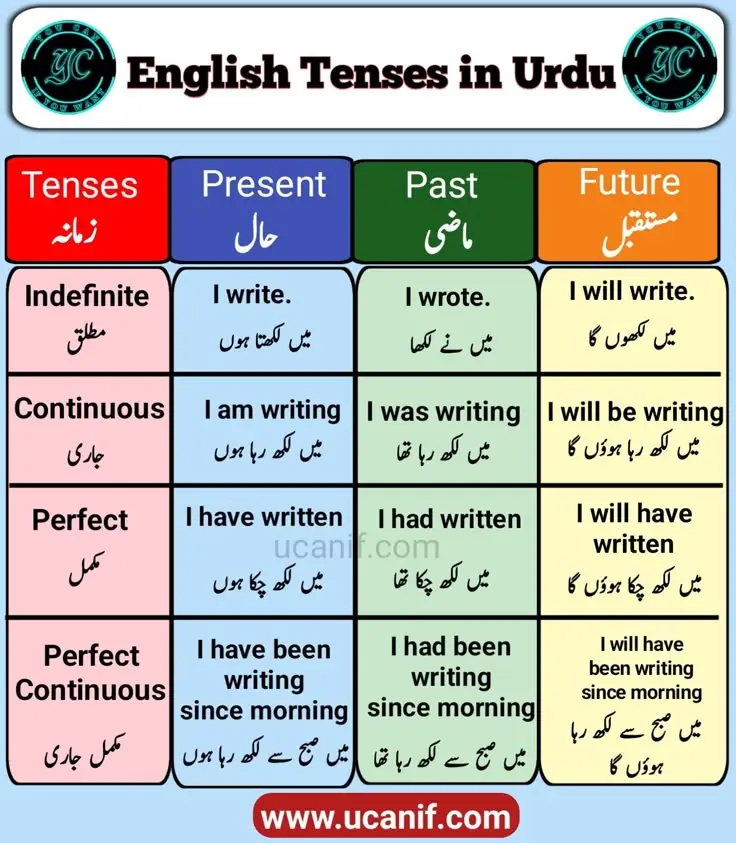
Tenses in Urdu are used to show time (past, present, future) in English sentences. There are 12 types of English tenses in Urdu, and each tense has its own structure and usage.
- All Tenses in Urdu with Examples | 12 Types + Chart + Practice
- What are tenses in Urdu?
- Definition of Tenses in Urdu
- How many tenses are there in Urdu?
- 12 Types of Tenses in Urdu with Examples
- What are the 12 Tenses in Urdu?
- 📊 12 Types of Tenses (Quick Overview)
- Why Learn Tenses in Urdu?
- Why are Tenses Important in Urdu?
- Present Tenses in Urdu (حال)
- Past Tenses in Urdu (ماضی)
- Future Tenses in Urdu (مستقبل)
- 📝 Practice Section (IMPORTANT 🔥)
- FAQs about Tenses in Urdu
- Conclusion
What are tenses in Urdu?
Tenses in Urdu show the time of an action, such as past (ماضی), present (حال), and future (مستقبل). They help form correct English sentences and improve grammar skills.
Definition of Tenses in Urdu
ٹینسز (Tenses) سے مراد وقت (زمانہ) ہوتا ہے۔ انگریزی میں تین بنیادی زمانے ہوتے ہیں:
- Past (ماضی): گزرا ہوا وقت
- Present (حال): موجودہ وقت
- Future (مستقبل): آنے والا وقت
How many tenses are there in Urdu?
There are 12 tenses in Urdu, divided into three main categories: present, past, and future. Each category has four types of tenses.
📘 12 English TENSES IN URDU – QUICK GUIDE
🟢 PRESENT (حال)
- Present Indefinite → تا ہے
- Present Continuous → رہا ہے
- Present Perfect → چکا ہے
- Present Perfect Continuous → رہا ہے + time
🔵 PAST (ماضی)
- Past Indefinite → تھا / ا
- Past Continuous → رہا تھا
- Past Perfect → چکا تھا
- Past Perfect Continuous → رہا تھا + time
🟣 FUTURE (مستقبل)
- Future Indefinite → گا / گی / گے
- Future Continuous → رہا ہوگا
- Future Perfect → چکا ہوگا
- Future Perfect Continuous → رہا ہوگا + time
💡 TIP:
Time words (since, for, yesterday, tomorrow) help identify tense!
12 Types of Tenses in Urdu with Examples
انگریزی میں ہر زمانے کی چار اقسام ہوتی ہیں، اس طرح کل 12 tenses بنتے ہیں:
- 4 Present Tenses
- 4 Past Tenses
- 4 Future Tenses
What are the 12 Tenses in Urdu?
The 12 tenses in Urdu are:
Present:
- Present Indefinite
- Present Continuous
- Present Perfect
- Present Perfect Continuous
Past:
- Past Indefinite
- Past Continuous
- Past Perfect
- Past Perfect Continuous
Future:
- Future Indefinite
- Future Continuous
- Future Perfect
- Future Perfect Continuous
📊 12 Types of Tenses (Quick Overview)
| Tense | Urdu Pehchan | Example |
|---|---|---|
| Present Indefinite | تا ہے | He plays |
| Present Continuous | رہا ہے | He is playing |
| Present Perfect | چکا ہے | He has played |
| Present Perfect Continuous | رہا ہے + time | He has been playing |
| Past Indefinite | تھا | He played |
| Past Continuous | رہا تھا | He was playing |
| Past Perfect | چکا تھا | He had played |
| Past Perfect Continuous | رہا تھا + time | He had been playing |
| Future Indefinite | گا | He will play |
| Future Continuous | رہا ہوگا | He will be playing |
| Future Perfect | چکا ہوگا | He will have played |
| Future Perfect Continuous | رہا ہوگا + time | He will have been playing |
Why Learn Tenses in Urdu?
Learning tenses in Urdu is very important if you want to speak and write correct English. Tenses help you understand when an action happens — in the past, present, or future.
- ✔ Improve your English speaking skills
- ✔ Help you make correct sentences
- ✔ Important for exams and tests
- ✔ Build strong grammar foundation
- ✔ Make communication clear and effective
Why are Tenses Important in Urdu?
Tenses are important because they help you:
- Speak correct English
- Understand time in sentences
- Avoid grammar mistakes
- Improve communication skills
Example:
I eat (Present) → میں کھاتا ہوں
I ate (Past) → میں نے کھایا
I will eat (Future) → میں کھاؤں گا
👉 Without tenses, your English can become confusing. That’s why learning tenses step by step is very important.
Present Tenses in Urdu (حال)
1. Present Indefinite Tense
Definition: This tense is used to describe daily habits and general truths.
پہچان: تا ہے، تی ہے، تے ہیں
Examples:
He plays cricket.
وہ کرکٹ کھیلتا ہے۔
She reads a book.
وہ کتاب پڑھتی ہے۔
Structure:
Subject + Verb (1st form) + s/es + Object
Common Mistakes:
❌ He go to school
✔ He goes to school
2. Present Continuous Tense
Definition: This tense is used for actions happening right now.
پہچان: رہا ہے، رہی ہے، رہے ہیں
Examples:
She is reading a book.
وہ کتاب پڑھ رہی ہے۔
They are playing football.
وہ فٹبال کھیل رہے ہیں۔
Structure:
Subject + is/am/are + Verb (ing) + Object
Common Mistakes:
❌ He is play
✔ He is playing
3. Present Perfect Tense
Definition: This tense shows an action that has been completed.
پہچان: چکا ہے، چکی ہے، چکے ہیں
Examples:
I have finished my work.
میں اپنا کام مکمل کر چکا ہوں۔
She has eaten food.
وہ کھانا کھا چکی ہے۔
Structure:
Subject + has/have + Verb (3rd form) + Object
Common Mistakes:
❌ I have ate
✔ I have eaten
4. Present Perfect Continuous Tense
Definition: This tense shows an action that started in the past and is still continuing.
پہچان: رہا ہوں + since/for
Examples:
I have been studying for two hours.
میں دو گھنٹے سے پڑھ رہا ہوں۔
She has been working since morning.
وہ صبح سے کام کر رہی ہے۔
Structure:
Subject + has/have been + Verb (ing) + since/for + time
Common Mistakes:
❌ I am studying since 2 hours
✔ I have been studying for 2 hours
Past Tenses in Urdu (ماضی)
5. Past Indefinite Tense
Definition: This tense is used for actions completed in the past.
پہچان: ا، ی، ے / تھا
Examples:
He played cricket.
وہ کرکٹ کھیلا۔
She wrote a letter.
اس نے خط لکھا۔
Structure:
Subject + Verb (2nd form) + Object
Common Mistakes:
❌ He play yesterday
✔ He played yesterday
6. Past Continuous Tense
Definition: This tense shows an action that was happening in the past.
پہچان: رہا تھا، رہی تھی، رہے تھے
Examples:
He was playing cricket.
وہ کرکٹ کھیل رہا تھا۔
They were watching TV.
وہ ٹی وی دیکھ رہے تھے۔
Structure:
Subject + was/were + Verb (ing) + Object
Common Mistakes:
❌ He was play
✔ He was playing
7. Past Perfect Tense
Definition: This tense shows an action completed before another action in the past.
پہچان: چکا تھا، چکی تھی، چکے تھے
Examples:
He had finished his work.
وہ اپنا کام مکمل کر چکا تھا۔
They had left before I arrived.
وہ میرے آنے سے پہلے جا چکے تھے۔
Structure:
Subject + had + Verb (3rd form) + Object
Common Mistakes:
❌ He had ate
✔ He had eaten
8. Past Perfect Continuous Tense
Definition: This tense shows a continuous action that was happening before a certain time in the past.
پہچان: رہا تھا + time
Examples:
I had been waiting for two hours.
میں دو گھنٹے سے انتظار کر رہا تھا۔
She had been studying since morning.
وہ صبح سے پڑھ رہی تھی۔
Structure:
Subject + had been + Verb (ing) + since/for + time
Common Mistakes:
❌ I was waiting since 2 hours
✔ I had been waiting for 2 hours
Future Tenses in Urdu (مستقبل)
9. Future Indefinite Tense
Definition: This tense shows actions that will happen in the future.
پہچان: گا، گی، گے
Examples:
He will play cricket.
وہ کرکٹ کھیلے گا۔
She will visit Lahore.
وہ لاہور جائے گی۔
Structure:
Subject + will + Verb (1st form) + Object
Common Mistakes:
❌ He will plays
✔ He will play
10. Future Continuous Tense
Definition: This tense shows an action that will be happening in the future.
پہچان: رہا ہوگا، رہی ہوگی
Examples:
He will be playing cricket.
وہ کرکٹ کھیل رہا ہوگا۔
They will be watching TV.
وہ ٹی وی دیکھ رہے ہوں گے۔
Structure:
Subject + will be + Verb (ing) + Object
Common Mistakes:
❌ He will playing
✔ He will be playing
11. Future Perfect Tense
Definition: This tense shows an action that will be completed before a certain time in the future.
پہچان: چکا ہوگا، چکی ہوگی
Examples:
I will have finished my work.
میں اپنا کام مکمل کر چکا ہوں گا / کر لیا ہوگا
She will have left before you arrive.
وہ تمہارے آنے سے پہلے جا چکی ہوگی۔
Structure:
Subject + will have + Verb (3rd form) + Object
Common Mistakes:
❌ I will have ate
✔ I will have eaten
12. Future Perfect Continuous Tense
Definition: This tense shows a continuous action that will continue up to a certain time in the future.
پہچان: رہا ہوگا + time
Examples:
I will have been studying for two hours.
میں دو گھنٹے سے پڑھ رہا ہوں گا۔
She will have been working since morning.
وہ صبح سے کام کر رہی ہوگی۔
Structure:
Subject + will have been + Verb (ing) + since/for + time
Common Mistakes:
❌ I will be studying since 2 hours
✔ I will have been studying for 2 hours
📝 Practice Section (IMPORTANT 🔥)
Translate into English:
- وہ کتاب پڑھ رہا ہے۔
- میں نے کام مکمل کر لیا ہے۔
- وہ کل آئے گا۔
Answers:
- He is reading a book.
- I have completed my work.
- He will come tomorrow.
Fill in the blanks:
- He ____ (play) cricket.
- She ____ (read) a book.
- They ____ (go) to school tomorrow.
Fill in the blanks answers:
- plays
- reads
- will go
FAQs about Tenses in Urdu
What are tenses in Urdu?
Tenses in Urdu show the time of an action, such as past (ماضی), present (حال), and future (مستقبل). They help form correct English sentences and improve grammar skills.
How many tenses are there in Urdu?
There are 12 tenses in Urdu, divided into three main categories: present, past, and future. Each category has four types of tenses.
What are the 3 main types of tenses?
The three main types of tenses are:Present Tense (حال)Past Tense (ماضی)Future Tense (مستقبل)
How can I learn tenses in Urdu easily?
You can learn tenses in Urdu easily by:Understanding basic rulesPracticing daily examplesLearning structures of each tenseUsing charts and exercises
Why are tenses important in English?
Tenses are important because they help you describe actions correctly in time. Without tenses, sentences can become confusing and unclear.
What is the easiest way to remember tenses?
The easiest way to remember tenses is:Learn one tense at a timePractice with examplesUse time words (yesterday, now, tomorrow)Revise regularly
These are the most common questions about tenses in Urdu that help beginners understand English grammar easily.
Conclusion
Now you have learned all 12 tenses in Urdu with examples, structure, and usage. If you practice these tenses daily, you can easily improve your English speaking and writing skills. Start with basic tenses and gradually move to advanced ones for better understanding.
It helps me very much .I am very to learn this tenses in simple words through this article .
versy simple urdum
Excellent