
Tenses

Present Indefinite Tense in Urdu

Present Indefinite Tense in Urdu – Rules, Exercises & Examples | فعل حال مطلق

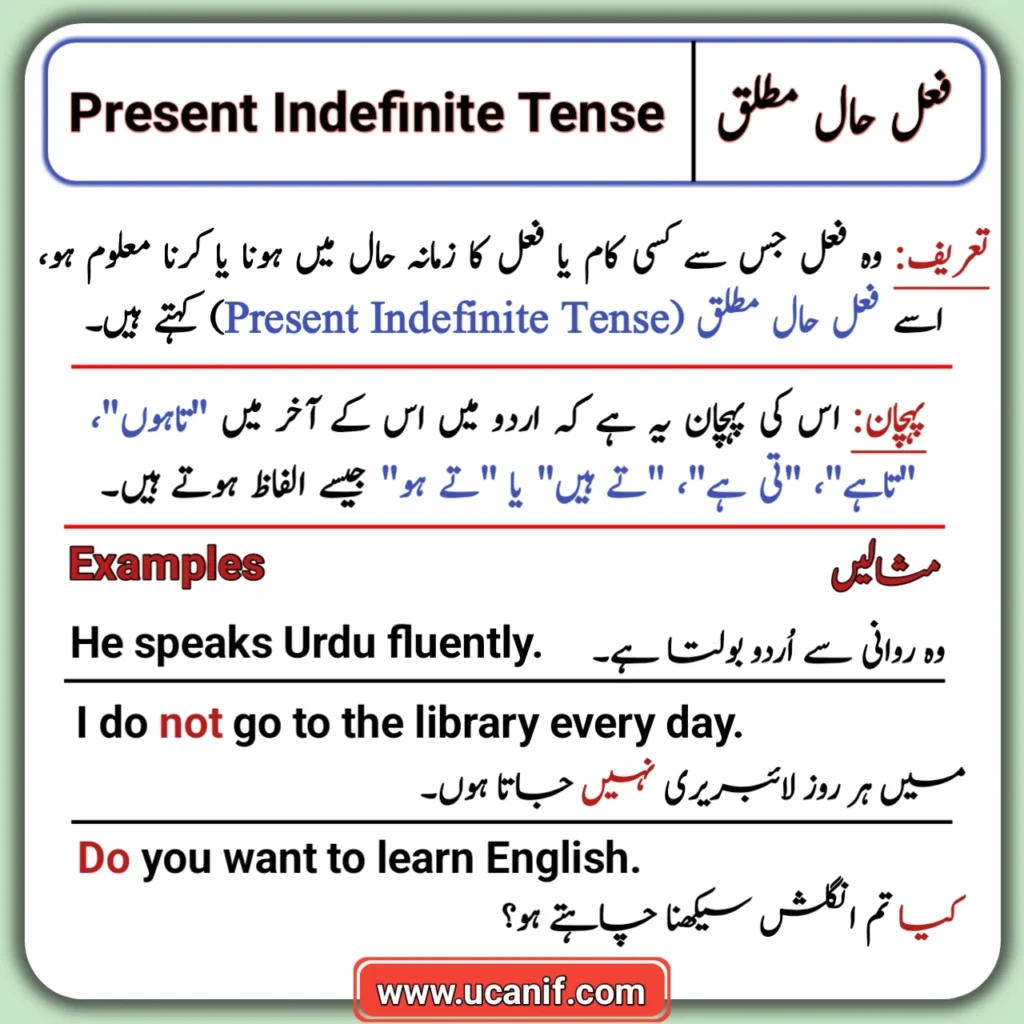
Present Indefinite Tense کو Simple Present Tense بھی کہتے ہیں۔ اردو قواعد میں اسے عموماً فعل حال مطلق کہا جاتا ہے۔ اس زمانے کا استعمال روزمرہ کے معمولات، عادات، مستقل حقائق، عمومی سچائیوں اور ایسی باتوں کے لیے ہوتا ہے جو عام طور پر درست ہوتی ہیں۔ Present Indefinite Tense کی اردو میں پہچان اردو میں اس زمانے کے عام جملوں کے آخر میں عموماً یہ الفاظ آتے ہیں: تا ہے تی ہے تے ہیں تا ہوں تی ہوں تے ہو اردو جملہ English Sentence میں روزانہ انگریزی سیکھتا ہوں۔ I learn English every day. وہ اسکول جاتا ہے۔ He goes to school. عائشہ کھانا پکاتی ہے۔ Ayesha cooks food. ہم نماز پڑھتے ہیں۔ We offer prayers. تم اچھا لکھتے ہو۔ You write well. یاد رکھیں: اردو میں پہچان کے الفاظ جملے کے مطابق بدل سکتے ہیں، لیکن انگریزی جملہ بنانے کے لیے Subject اور Verb کا درست استعمال ضروری ہے۔ Present Indefinite Tense کے استعمالات 1. روزمرہ کے معمولات (Daily Routines) I wake up early. — میں جلدی اٹھتا ہوں۔ She goes to school. — وہ اسکول جاتی ہے۔ 2. عادات (Habits) He drinks tea every morning. — وہ ہر صبح چائے پیتا ہے۔ They play cricket on Sundays. — وہ اتوار کے دن کرکٹ کھیلتے ہیں۔ 3. مستقل حقائق (General Facts) The sun rises in the east. — سورج مشرق سے نکلتا ہے۔ Water boils at 100°C. — پانی 100 ڈگری سینٹی گریڈ پر ابلتا ہے۔ 4. عمومی سچائیاں (Universal Truths) The earth moves around the sun. — زمین سورج کے گرد گردش کرتی ہے۔ Honesty builds trust. — ایمانداری اعتماد پیدا کرتی ہے۔ 5. پسند اور ناپسند (Likes and Dislikes) I like English. — مجھے انگریزی پسند ہے۔ She loves her family. — وہ اپنے خاندان سے محبت کرتی ہے۔ 1. Affirmative Sentences – مثبت جملے مثبت جملے وہ ہوتے ہیں جن میں کسی کام کے کرنے یا ہونے کی بات بیان کی جاتی ہے۔ مثبت جملہ بنانے کا قاعدہ Subject + Verb + Object اس زمانے میں فعل کی پہلی شکل (V1) استعمال ہوتی ہے، لیکن Subject کے مطابق فعل میں تبدیلی آتی ہے۔ مزید افعال کی پہلی، دوسری اور تیسری شکلیں (V1, V2, V3) اردو معنی کے ساتھ سیکھنے کے لیے ہماری [Verb Forms with Urdu Meaning] کی مکمل فہرست دیکھیں۔ Subject Verb کا استعمال I, We, You, They Verb کی پہلی شکل (V1) He, She, It Verb کی پہلی شکل کے ساتھ s/es Singular Noun Verb کی پہلی شکل کے ساتھ s/es Plural Noun Verb کی پہلی شکل (V1) مثالیں I read a book. — میں کتاب پڑھتا ہوں۔ We play cricket. — ہم کرکٹ کھیلتے ہیں۔ You speak English. — تم انگریزی بولتے ہو۔ They work hard. — وہ محنت کرتے ہیں۔ He reads a book. — وہ کتاب پڑھتا ہے۔ She cooks food. — وہ کھانا پکاتی ہے۔ Ali goes to school. — علی اسکول جاتا ہے۔ My friends play football. — میرے دوست فٹبال کھیلتے ہیں۔ فعل کے ساتھ S یا ES لگانے کے قواعد قاعدہ 1: عام طور پر فعل کے آخر میں S لگاتے ہیں۔ V1 He/She/It کے ساتھ Read Reads Eat Eats Play Plays Drink Drinks Write Writes Work Works قاعدہ 2: اگر فعل کے آخر میں ch, sh, ss, x یا o ہو تو عموماً ES لگاتے ہیں۔ V1 He/She/It کے ساتھ Watch Watches Wash Washes Pass Passes Fix Fixes Go Goes Do Does قاعدہ 3: اگر فعل کے آخر میں Consonant + Y ہو تو Y کی جگہ IES لگاتے ہیں۔ V1 He/She/It کے ساتھ Study Studies Cry Cries Try Tries Fly Flies قاعدہ 4: اگر Y سے پہلے Vowel ہو تو صرف S لگاتے ہیں۔ V1 He/She/It کے ساتھ Play Plays Enjoy Enjoys Buy Buys Pray Prays قاعدہ 5: کچھ افعال کی شکل خاص طور پر یاد رکھیں۔ V1 He/She/It کے ساتھ Have Has Do Does Go Goes 25 Affirmative Sentences – مثبت جملوں کی مثالیں No. English Sentence اردو ترجمہ 1 I learn English every day. میں روزانہ انگریزی سیکھتا ہوں۔ 2 We pray five times a day. ہم دن میں پانچ وقت نماز پڑھتے ہیں۔ 3 She teaches English. وہ انگریزی پڑھاتی ہے۔ 4 He works in an office. وہ دفتر میں کام کرتا ہے۔ 5 My mother cooks delicious food. میری والدہ مزیدار کھانا پکاتی ہیں۔ 6 They help poor people. وہ غریب لوگوں کی مدد کرتے ہیں۔ 7 Ali speaks English well. علی اچھی انگریزی بولتا ہے۔ 8 Birds build nests. پرندے گھونسلے بناتے ہیں۔ 9 The shop opens at nine. دکان نو بجے کھلتی ہے۔ 10 My brother drives a car. میرا بھائی گاڑی چلاتا ہے۔ 11 Children love stories. بچوں کو کہانیاں پسند ہوتی ہیں۔ 12 Water boils at 100°C. پانی 100 ڈگری سینٹی گریڈ پر ابلتا ہے۔ 13 I wake up early. میں جلدی اٹھتا ہوں۔ 14 He drinks milk every morning. وہ ہر صبح دودھ پیتا ہے۔ 15 We study together. ہم مل کر پڑھتے ہیں۔ 16 She writes beautiful stories. وہ خوب صورت کہانیاں لکھتی ہے۔ 17 My father reads the newspaper. میرے والد اخبار پڑھتے ہیں۔ 18 The teacher explains the lesson. استاد سبق سمجھاتے ہیں۔ 19 You speak politely. تم ادب سے بات کرتے ہو۔ 20 The train arrives on time. ٹرین وقت پر پہنچتی ہے۔ 21 My sister sings well. میری بہن اچھا گاتی ہے۔ 22 Farmers grow crops. کسان فصلیں اگاتے ہیں۔ 23 The baby sleeps peacefully. بچہ سکون سے سوتا ہے۔ 24 Our school starts at eight. ہمارا اسکول آٹھ بجے شروع ہوتا ہے۔ 25 The earth moves around the sun. زمین سورج کے گرد گردش کرتی ہے۔ 2. Negative Sentences – منفی جملے منفی جملوں میں کسی کام کے نہ کرنے یا نہ ہونے کا اظہار کیا جاتا ہے۔ منفی جملہ بنانے کا قاعدہ Subject + Do/Does + Not + Verb (V1) + Object اس زمانے میں منفی جملے بنانے کے لیے Do not یا Does not استعمال ہوتا ہے۔ Subject Helping Verb I Do not We Do not You Do not They Do not He Does not She Does not It Does not Singular Noun Does not اہم

Present Indefinite Tense in Urdu – Rules, Exercises & Examples | فعل حال مطلق Read More »

Tenses in Urdu, Tenses in Urdu with examples

All 12 Tenses in Urdu with Examples, Structure & Chart (Easy Guide)

All Tenses in Urdu with Examples | 12 Types + Chart + Practice If you want to learn English grammar easily, understanding tenses in Urdu is very important. In this guide, you will learn all 12 types of English tenses in Urdu with simple explanations and examples. Tenses in Urdu are used to show time (past, present, future) in English sentences. There are 12 types of English tenses in Urdu, and each tense has its own structure and usage. What are tenses in Urdu? Tenses in Urdu show the time of an action, such as past (ماضی), present (حال), and future (مستقبل). They help form correct English sentences and improve grammar skills. Definition of Tenses in Urdu ٹینسز (Tenses) سے مراد وقت (زمانہ) ہوتا ہے۔ انگریزی میں تین بنیادی زمانے ہوتے ہیں: How many tenses are there in Urdu? There are 12 tenses in Urdu, divided into three main categories: present, past, and future. Each category has four types of tenses. 📘 12 English TENSES IN URDU – QUICK GUIDE 🟢 PRESENT (حال) 🔵 PAST (ماضی) 🟣 FUTURE (مستقبل) 💡 TIP:Time words (since, for, yesterday, tomorrow) help identify tense! 12 Types of Tenses in Urdu with Examples انگریزی میں ہر زمانے کی چار اقسام ہوتی ہیں، اس طرح کل 12 tenses بنتے ہیں: What are the 12 Tenses in Urdu? The 12 tenses in Urdu are: Present: Past: Future: 📊 12 Types of Tenses (Quick Overview) Tense Urdu Pehchan Example Present Indefinite تا ہے He plays Present Continuous رہا ہے He is playing Present Perfect چکا ہے He has played Present Perfect Continuous رہا ہے + time He has been playing Past Indefinite تھا He played Past Continuous رہا تھا He was playing Past Perfect چکا تھا He had played Past Perfect Continuous رہا تھا + time He had been playing Future Indefinite گا He will play Future Continuous رہا ہوگا He will be playing Future Perfect چکا ہوگا He will have played Future Perfect Continuous رہا ہوگا + time He will have been playing Why Learn Tenses in Urdu? Learning tenses in Urdu is very important if you want to speak and write correct English. Tenses help you understand when an action happens — in the past, present, or future. Why are Tenses Important in Urdu? Tenses are important because they help you: Example: I eat (Present) → میں کھاتا ہوں I ate (Past) → میں نے کھایا I will eat (Future) → میں کھاؤں گا 👉 Without tenses, your English can become confusing. That’s why learning tenses step by step is very important. Present Tenses in Urdu (حال) 1. Present Indefinite Tense Definition: This tense is used to describe daily habits and general truths. پہچان: تا ہے، تی ہے، تے ہیں Examples: He plays cricket. وہ کرکٹ کھیلتا ہے۔ She reads a book. وہ کتاب پڑھتی ہے۔ Structure: Subject + Verb (1st form) + s/es + Object Common Mistakes: ❌ He go to school ✔ He goes to school 👉 Present Indefinite Tense in Urdu full detail yahan se seekhein 2. Present Continuous Tense Definition: This tense is used for actions happening right now. پہچان: رہا ہے، رہی ہے، رہے ہیں Examples: She is reading a book. وہ کتاب پڑھ رہی ہے۔ They are playing football. وہ فٹبال کھیل رہے ہیں۔ Structure: Subject + is/am/are + Verb (ing) + Object Common Mistakes: ❌ He is play ✔ He is playing 👉 Learn Present Continuous Tense in Urdu step by step 3. Present Perfect Tense Definition: This tense shows an action that has been completed. پہچان: چکا ہے، چکی ہے، چکے ہیں Examples: I have finished my work. میں اپنا کام مکمل کر چکا ہوں۔ She has eaten food. وہ کھانا کھا چکی ہے۔ Structure: Subject + has/have + Verb (3rd form) + Object Common Mistakes: ❌ I have ate ✔ I have eaten 📘 Learn Present Perfect Tense in Urdu with examples 4. Present Perfect Continuous Tense Definition: This tense shows an action that started in the past and is still continuing. پہچان: رہا ہوں + since/for Examples: I have been studying for two hours. میں دو گھنٹے سے پڑھ رہا ہوں۔ She has been working since morning. وہ صبح سے کام کر رہی ہے۔ Structure: Subject + has/have been + Verb (ing) + since/for + time Common Mistakes: ❌ I am studying since 2 hours ✔ I have been studying for 2 hours 📘 Learn Present Perfect Continuous Tense in Urdu easily Past Tenses in Urdu (ماضی) 5. Past Indefinite Tense Definition: This tense is used for actions completed in the past. پہچان: ا، ی، ے / تھا Examples: He played cricket. وہ کرکٹ کھیلا۔ She wrote a letter. اس نے خط لکھا۔ Structure: Subject + Verb (2nd form) + Object Common Mistakes: ❌ He play yesterday ✔ He played yesterday 📘 Learn Past Indefinite Tense in Urdu with examples 6. Past Continuous Tense Definition: This tense shows an action that was happening in the past. پہچان: رہا تھا، رہی تھی، رہے تھے Examples: He was playing cricket. وہ کرکٹ کھیل رہا تھا۔ They were watching TV. وہ ٹی وی دیکھ رہے تھے۔ Structure: Subject + was/were + Verb (ing) + Object Common Mistakes: ❌ He was play ✔ He was playing 📘 Learn Past Continuous Tense in Urdu step by step 7. Past Perfect Tense Definition: This tense shows an action completed before another action in the past. پہچان: چکا تھا، چکی تھی، چکے تھے Examples: He had finished his work. وہ اپنا کام مکمل کر چکا تھا۔ They had left before I arrived. وہ میرے آنے سے پہلے جا چکے تھے۔ Structure: Subject + had + Verb (3rd form) + Object Common Mistakes: ❌ He had ate ✔ He had eaten 📘 Learn Past Perfect Tense in Urdu with examples 8. Past Perfect Continuous Tense Definition: This tense shows a continuous action that was happening before a certain time in the past. پہچان: رہا تھا + time Examples: I had been waiting for two hours. میں دو گھنٹے سے انتظار کر رہا تھا۔ She

All 12 Tenses in Urdu with Examples, Structure & Chart (Easy Guide) Read More »

Scroll to Top