

Present Perfect Continuous Tense in Urdu – 40+ Easy Examples & Exercises
Are you struggling to understand how to use the Present Perfect Continuous Tense in Urdu? Don’t worry! This complete guide makes it super easy for you to learn grammar rules, sentence structures, and the correct use of since and for in both English and Urdu. With simple examples, exercises, and easy-to-follow tips, you can start speaking and writing confidently in this tense today!
کیا آپ کو یہ سمجھنے میں مشکل ہو رہی ہے کہ Present Perfect Continuous Tense in Urdu کیسے استعمال ہوتا ہے؟ پریشان مت ہوں! یہ مکمل گائیڈ آپ کے لیے گرائمر رولز، جملے بنانے کا طریقہ، اور since اور for کا صحیح استعمال آسان طریقے سے سکھاتا ہے۔ سادہ مثالیں اور مشق کے ساتھ، آپ آج ہی اس ٹینس میں اعتماد کے ساتھ بات کر سکتے ہیں۔
پریزنٹ پرفیکٹ کنٹینیوس ٹینس اُن کاموں کے لیے استعمال ہوتا ہے جو ماضی میں شروع ہوئے ہوں اور اب بھی جاری ہوں۔
This comprehensive guide covers grammar rules, sentence structures, the use of “since” and “for,” and interactive practice exercises.
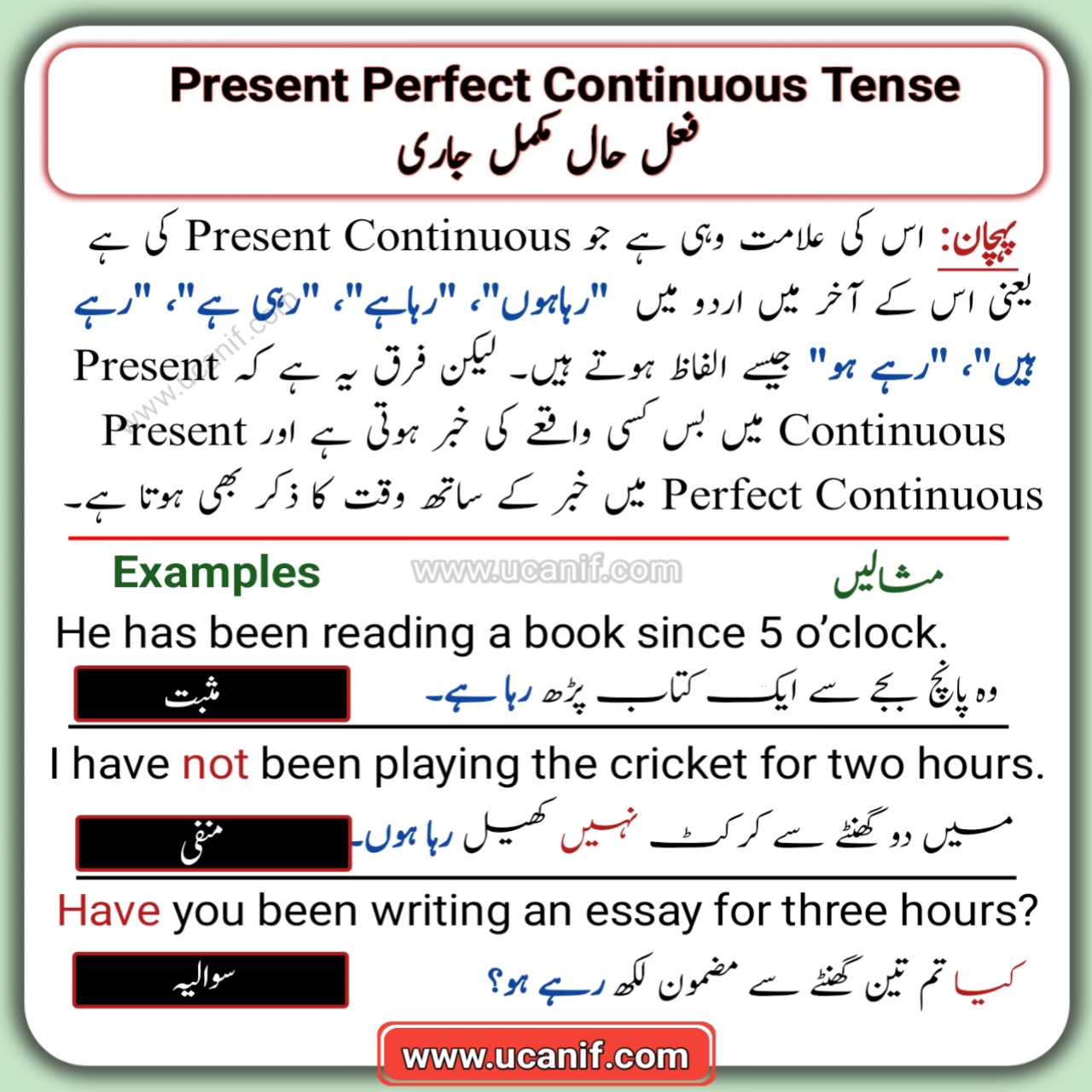
Present Perfect Continuous Tense in Urdu: Rules & Structure
When an activity began in the past and continues to happen at the time of speaking, we use this tense.
Subject + has/have + been + Verb(ing) + Since/For + Time
Urdu Identification (Pehchan):
In Urdu sentences, the identification is usually the presence of time followed by “se raha hai”, “se rahi hai”, or “se rahe hain”.
Present Perfect Continuous Tense in Urdu: Positive Sentences
| English Sentence | Urdu Translation |
|---|---|
| I have been studying for two hours. | میں دو گھنٹوں سے پڑھ رہا ہوں۔ |
| She has been working since morning. | وہ صبح سے کام کر رہی ہے۔ |
| They have been playing cricket since 4 PM. | وہ 4 بجے سے کرکٹ کھیل رہے ہیں۔ |
Present Perfect Continuous Tense in Urdu: Use of “Since” and “For”
Understanding the difference between Since and For is crucial for mastering this tense:
- Since: Used for a specific point in time (e.g., Since Monday, Since 2010, Since morning).
- For: Used for a duration or period of time (e.g., For 2 hours, For 5 days, For a long time).
Present Perfect Continuous Tense in Urdu: Negative and Interrogative sentences
Negative Structure:
Subject + has/have + NOT + been + Verb(ing)...
Example: She has not been feeling well since yesterday.
Interrogative Structure:
Has/Have + Subject + been + Verb(ing)...?
Example: Have you been waiting for me for an hour?
⚠️ Common Mistakes to Avoid
- Wrong: I am working here since 2020. (This is Present Continuous)
- Right: I have been working here since 2020.
- Note: When a time reference (Since/For) is mentioned, you must use “has/have been” instead of “is/am/are.”
Tense Summary
🕒 Started in Past → 🔄 Continuing Now → 📌 Uses Since/For
He / She / It / Single Name = Has been | I / We / You / They / Plural = Have been
Present Perfect Continuous Tense in Urdu: Exercises
Click on the correct option:
Q1: Which sentence is grammatically correct?
Q2: Correct Urdu for: “I have been reading for two hours.”
Related Lessons
Present Perfect Continuous Tense in Urdu: Practice Sentences
Practice these sentences to understand how to shift between different sentence types in the Present Perfect Continuous Tense.
Positive & Negative| English Sentence | Urdu Translation |
|---|---|
| It has been raining since last night. | پچھلی رات سے بارش ہو رہی ہے۔ |
| They have not been visiting us for years. | وہ سالوں سے ہمارے پاس نہیں آ رہے ہیں۔ |
| Aslam has been repairing the car since morning. | اسلم صبح سے گاڑی ٹھیک کر رہا ہے۔ |
| We have not been using this laptop for a month. | ہم ایک ماہ سے یہ لیپ ٹاپ استعمال نہیں کر رہے ہیں۔ |
| English Question | Urdu Translation |
|---|---|
| Have you been waiting here since 10 o’clock? | کیا آپ یہاں 10 بجے سے انتظار کر رہے ہیں؟ |
| Has he been crying for a long time? | کیا وہ کافی دیر سے رو رہا ہے؟ |
| Why have they been making a noise since morning? | وہ صبح سے شور کیوں مچا رہے ہیں؟ |
40 Examples of Present Perfect Continuous Tense in Urdu & English
To master the Present Perfect Continuous Tense in Urdu, you need to practice various scenarios. Below are 40 Present Perfect Continuous Tense examples in Urdu divided into Affirmative, Negative, and Interrogative forms.
| English Sentence | Urdu Translation |
|---|---|
| 1. It has been raining since morning. | صبح سے بارش ہو رہی ہے۔ |
| 2. I have been waiting for you for two hours. | میں دو گھنٹوں سے آپ کا انتظار کر رہا ہوں۔ |
| 3. She has been cooking since 11 AM. | وہ صبح 11 بجے سے کھانا پکا رہی ہے۔ |
| 4. They have been playing football for a long time. | وہ کافی دیر سے فٹ بال کھیل رہے ہیں۔ |
| 5. We have been living in Lahore since 2015. | ہم 2015 سے لاہور میں رہ رہے ہیں۔ |
| 6. Aslam has been working in this office for five years. | اسلم پانچ سال سے اس دفتر میں کام کر رہا ہے۔ |
| 7. The gardener has been watering plants since evening. | مالی شام سے پودوں کو پانی دے رہا ہے۔ |
| 8. Birds have been chirping since sunrise. | پرندے طلوعِ آفتاب سے چہچہا رہے ہیں۔ |
| 9. I have been learning English for three months. | میں تین ماہ سے انگریزی سیکھ رہا ہوں۔ |
| 10. It has been snowing on the mountains since yesterday. | پہاڑوں پر کل سے برف باری ہو رہی ہے۔ |
| 11. The baby has been sleeping for four hours. | بچہ چار گھنٹے سے سو رہا ہے۔ |
| 12. He has been reading this book since Monday. | وہ پیر سے یہ کتاب پڑھ رہا ہے۔ |
| 13. Workers have been building this bridge for a year. | مزدور ایک سال سے یہ پل بنا رہے ہیں۔ |
| 14. She has been stitching clothes since noon. | وہ دوپہر سے کپڑے سی رہی ہے۔ |
| 15. We have been traveling since last night. | ہم پچھلی رات سے سفر کر رہے ہیں۔ |
| 16. He has not been taking his medicine for three days. | وہ تین دن سے اپنی دوا نہیں لے رہا ہے۔ |
| 17. I have not been using social media since January. | میں جنوری سے سوشل میڈیا استعمال نہیں کر رہا ہوں۔ |
| 18. They have not been talking to each other for months. | وہ مہینوں سے ایک دوسرے سے بات نہیں کر رہے ہیں۔ |
| 19. It has not been raining in the city for a week. | شہر میں ایک ہفتے سے بارش نہیں ہو رہی ہے۔ |
| 20. She has not been attending classes since Tuesday. | وہ منگل سے کلاسوں میں حاضر نہیں ہو رہی ہے۔ |
| 21. We have not been watching TV for several days. | ہم کئی دنوں سے ٹی وی نہیں دیکھ رہے ہیں۔ |
| 22. The tailor has not been sewing my suit since Friday. | درزی جمعہ سے میرا سوٹ نہیں سی رہا ہے۔ |
| 23. You have not been exercising for a long time. | آپ کافی عرصے سے ورزش نہیں کر رہے ہیں۔ |
| 24. Ahmed has not been driving the car since the accident. | احمد حادثے کے بعد سے گاڑی نہیں چلا رہا ہے۔ |
| 25. They have not been helping us for two years. | وہ دو سال سے ہماری مدد نہیں کر رہے ہیں۔ |
| 26. Has it been raining since morning? | کیا صبح سے بارش ہو رہی ہے؟ |
| 27. Have you been living here for ten years? | کیا آپ یہاں دس سال سے رہ رہے ہیں؟ |
| 28. Has she been studying since 8 o’clock? | کیا وہ 8 بجے سے پڑھ رہی ہے؟ |
| 29. Have they been making a noise for half an hour? | کیا وہ آدھے گھنٹے سے شور مچا رہے ہیں؟ |
| 30. Has the peon been ringing the bell since 9 AM? | کیا چپراسی صبح 9 بجے سے گھنٹی بجا رہا ہے؟ |
| 31. Why have you been crying since yesterday? | آپ کل سے کیوں رو رہے ہیں؟ |
| 32. Where has he been hiding for two days? | وہ دو دن سے کہاں چھپا ہوا ہے؟ |
| 33. How long have they been playing cricket? | وہ کب سے کرکٹ کھیل رہے ہیں؟ |
| 34. Has the guest been waiting for an hour? | کیا مہمان ایک گھنٹے سے انتظار کر رہا ہے؟ |
| 35. Since when has it been blowing hard? | ہوا کب سے تیز چل رہی ہے؟ |
| 36. Has the patient been improving since Monday? | کیا مریض کی حالت پیر سے بہتر ہو رہی ہے؟ |
| 37. Have we been wasting our time for years? | کیا ہم سالوں سے اپنا وقت ضائع کر رہے ہیں؟ |
| 38. Has she been cleaning the house since morning? | کیا وہ صبح سے گھر کی صفائی کر رہی ہے؟ |
| 39. Have the farmers been harvesting crops for a week? | کیا کسان ایک ہفتے سے فصلیں کاٹ رہے ہیں؟ |
| 40. Has the teacher been explaining the lesson for 20 minutes? | کیا استاد 20 منٹ سے سبق سمجھا رہا ہے؟ |
Frequently Asked Questions (FAQs)
Present Continuous (e.g., “I am eating”) focuses only on the action happening now. Present Perfect Continuous (e.g., “I have been eating for 10 minutes”) emphasizes the duration or when the action started.
No. “Since” is used for a starting point (Since 2 PM). For a total duration like “two hours,” we must use “For.”
Use “has been” with 3rd person singular subjects (He, She, It, or a single name). Use “have been” with I, We, You, They, and plural nouns.
Yes, if the action has just finished and there is a visible result now. For example: “I am tired because I have been running.” (Running just stopped, but the tiredness remains).
The present perfect continuous tense in Urdu is used for actions that started in the past and are still continuing in the present.
By practicing these examples, you can easily understand the present perfect continuous tense in Urdu.
This lesson on present perfect continuous tense in Urdu will help students, beginners, and exam candidates speak English confidently.
I like your page very much. If there is a Facebook page or WhatsApp, please give the link. Thank you very much.
Very very nice excellent
I love your page
Thank you ❤️
Thank you ❤️
Facebook Page:
Learn English by ucanif